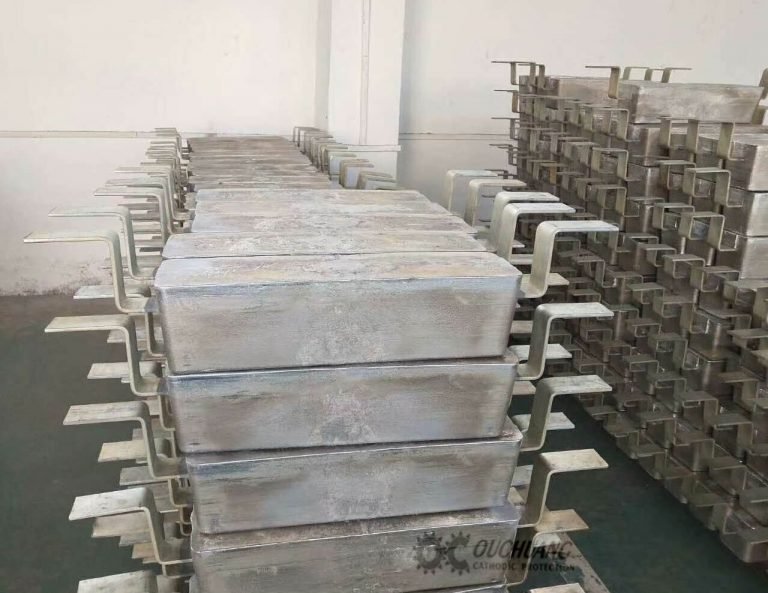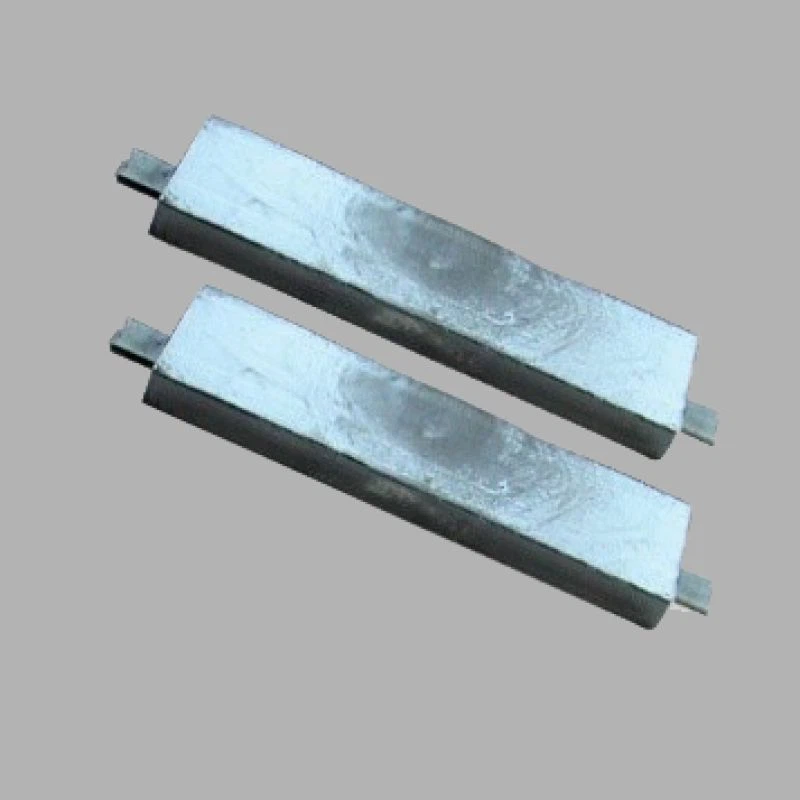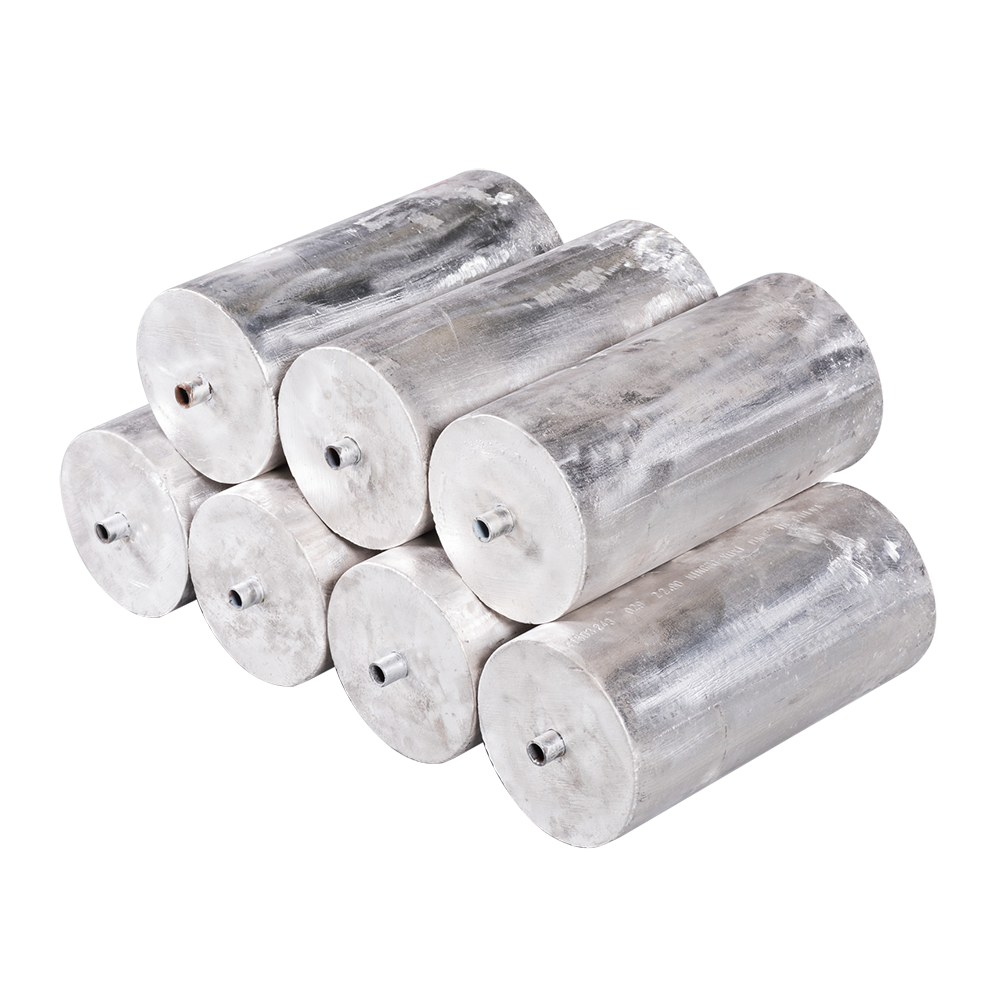
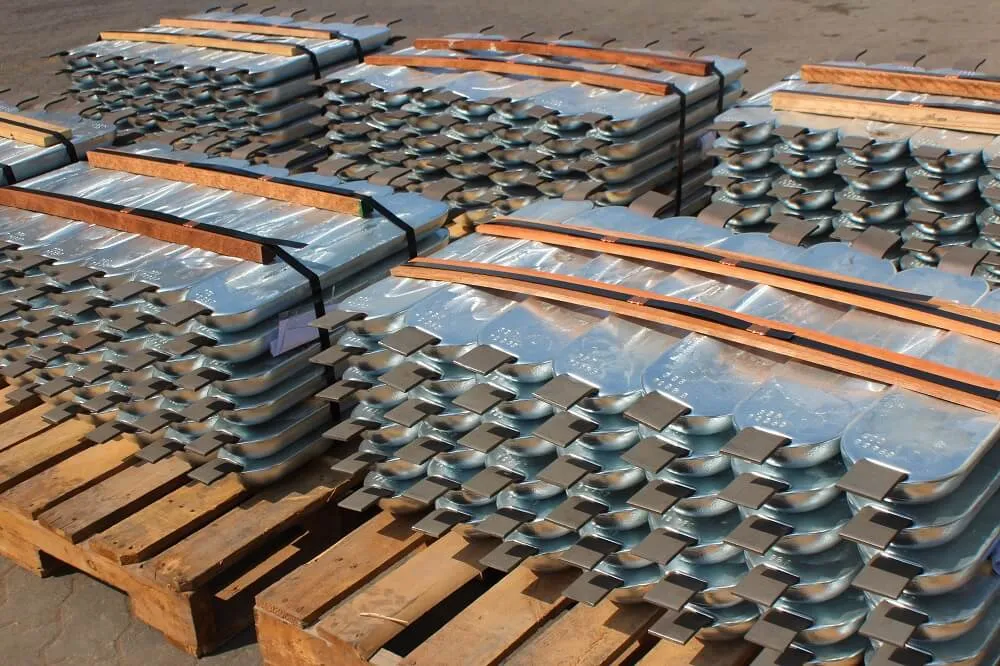
The industry's most widely used sacrificial anode
Aluminium alloy anodes are the most widely used sacrificial anodes in offshore and marine cathodic protection. Alloyed with zinc and indium, aluminium stays electrochemically active in seawater and delivers more than three times the capacity of zinc per kilogram.
High capacity and low weight together mean fewer, lighter anodes for the same design life — less installation effort and less structural load on jackets, pipelines and vessels.
We cast aluminium anodes to Galvalum III-equivalent, DNV / ISO and Alanode chemistries, or to your own specification. Every dimension, insert and fixing detail is produced to your approved drawings.
Key properties of aluminium anodes
Highest capacity per kilogram
2,550–2,750 Ah/kg — more protective current from every kilogram of anode.
Low weight
Roughly 60% lighter than zinc by volume, easing handling, installation and structural loads.
Activated alloy
Indium prevents the passive oxide film that would otherwise stop aluminium working as an anode.
Stable potential
Closed-circuit potential more negative than −1.05 V (Ag/AgCl) throughout service.
Recognised chemistries
Galvalum III equivalent, DNV / ISO and Alanode compositions, or your own specification.
Engineered to drawing
Stand-off, flush, bracelet and custom shapes, each made to your approved design.
Technical data
Typical supply parameters. Final values are confirmed against your approved drawing and CP design.
- Product
- Aluminium sacrificial anode
- Protection method
- Galvanic (sacrificial) cathodic protection
- Material
- Aluminium alloy (Al-Zn-In)
- Typical applications
- Marine, offshore and submerged steel structures
- Service environment
- Seawater and marine
- Configuration
- Application-specific
- Dimensions
- To approved drawing and CP design
- Mounting
- To the approved installation design
- Electrical continuity
- As required by the CP design
- Design life
- As defined by the CP design
- Specification
- Galvalum III equivalent, DNV / ISO, Alanode or client specification
Grades and standards
Galvalum III equivalent
A well-established Al-Zn-In chemistry for seawater service, cast to equivalent composition limits.
DNV / ISO
Al-Zn-In composition in line with the limits given in DNV-RP-B401 and ISO 15589-2.
Alanode
Aluminium alloy chemistry supplied to the applicable Alanode composition limits.
Client specification
Your own chemistry, testing and documentation requirements, reviewed and confirmed with you before production starts.
Chemical composition
Composition limits in % by weight for the chemistries we supply.
| Element | Galvalum III (equiv.) | DNV / ISO | Alanode |
|---|---|---|---|
| Zn | 2.0 – 6.5 | 2.5 – 5.75 | 0.50 – 5.00 |
| In | 0.01 – 0.02 | 0.016 – 0.04 | 0.005 – 0.05 |
| Si | 0.08 – 0.20 | 0.12 max. | 0.10 max. |
| Fe | 0.12 max. | 0.09 max. | 0.13 max. |
| Cu | 0.006 max. | 0.003 max. | 0.01 max. |
| Cd | 0.002 max. | — | — |
| Others (each) | 0.02 max. | 0.02 max. | 0.02 max. |
| Others (total) | 0.06 max. | — | — |
| Al | Remainder | Remainder | Remainder |
Specification note
Final chemistry should always be confirmed against the applicable material specification and approved project documents before production.
Electrochemical performance
Reference characteristics for our aluminium alloy anodes.
- Test environment
- Seawater at 23 °C
- Reference electrode
- Silver / silver chloride (Ag/AgCl)
- Open-circuit potential
- More negative than −1.10 V vs Ag/AgCl
- Closed-circuit potential
- More negative than −1.05 V vs Ag/AgCl
- Electrochemical capacity
- 2,550 – 2,750 Ah/kg
Performance note
Values apply to aluminium alloy anodes in seawater at 23 °C. In-service performance also depends on alloy chemistry, temperature, current demand and anode geometry, so final design values should always come from the approved cathodic protection (CP) design.
How the anode materials compare
A quick reference to help you see where this material fits.
| Property | Aluminium (Al-Zn-In)This page | Zinc | Magnesium |
|---|---|---|---|
| Main service environment | Seawater and marine | Seawater, marine and saline mud | Soil and fresh water |
| Closed-circuit potential | More negative than −1.05 V (Ag/AgCl) | Approx. −1.03 V (Ag/AgCl) | Approx. −1.5 to −1.7 V (Cu/CuSO₄) |
| Electrochemical capacity | 2,550 – 2,750 Ah/kg | Approx. 780 Ah/kg | Approx. 1,100 – 1,230 Ah/kg |
| Density | Approx. 2.7 g/cm³ | Approx. 7.1 g/cm³ | Approx. 1.8 g/cm³ |
| Key strength | Highest capacity per kilogram — fewer, lighter anodes | Proven, self-regulating and compact | Highest driving voltage for high-resistivity electrolytes |
| Points to check | Chemistry must be tightly controlled to stay active | Heavier; not recommended above approx. 50 °C | Consumed quickly; generally not used in seawater |
Typical reference values for comparison only. The correct material is always confirmed by the approved CP design for the structure and its environment.
Points to consider when specifying aluminium
- Performance depends on tight control of indium, iron, copper and silicon — specify a recognised chemistry and confirm the limits.
- Aluminium anodes are designed for seawater; in buried soil or fresh water, magnesium is usually the better choice.
- Performance can fall in warm seawater or seabed sediment; the CP design should apply the appropriate design capacity.
- Insert design and anode net weight should be agreed early, because they drive both casting and installation.
Applications
Offshore platforms and jackets
Long-life protection for submerged structural steel.
Subsea pipelines
Half-shell and segmented bracelet anodes.
Ship hulls
Weld-on and bolt-on hull anodes for new builds and dry-dock replacement.
Offshore wind foundations
Monopile, jacket and substation protection.
Ports and harbours
Piles, jetties and quay walls in seawater.
Retrofit and life extension
Additional or replacement anodes for existing assets.
Where aluminium anodes are used
Explore the product configurations available in this material.
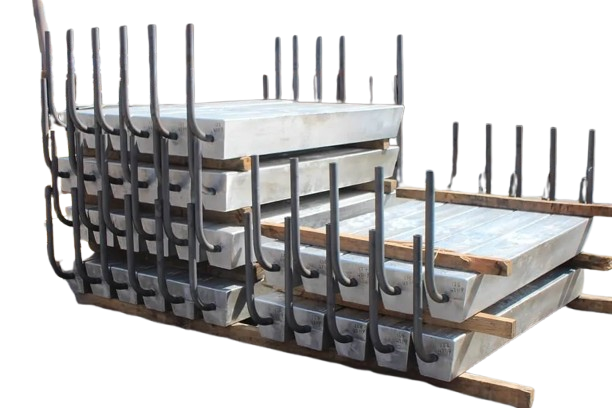 Jacket anodesOffshore platforms and jackets
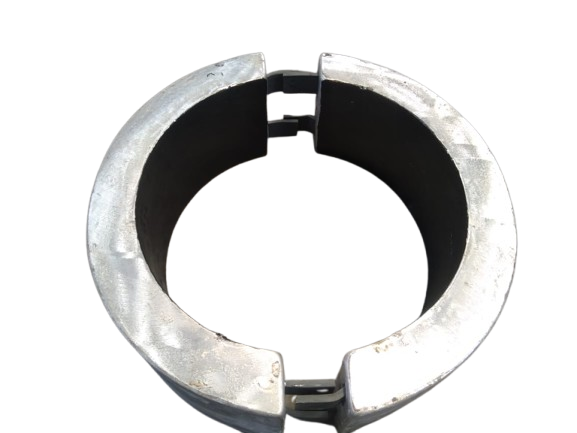 Pipeline bracelet anodesSubsea pipelines, 2" to 56"
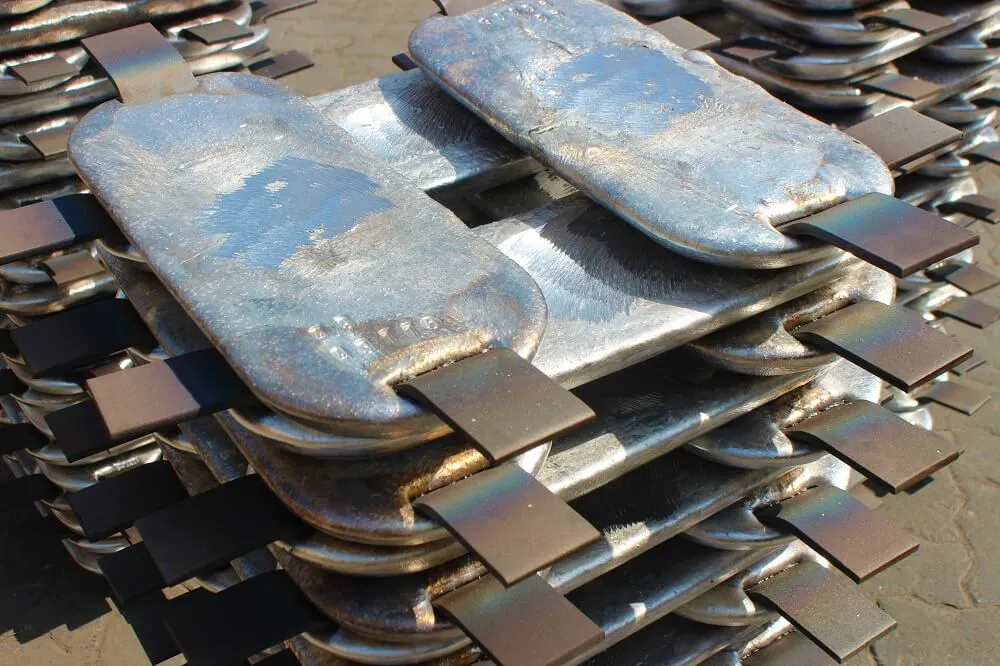 Hull anodesShips and marine vessels
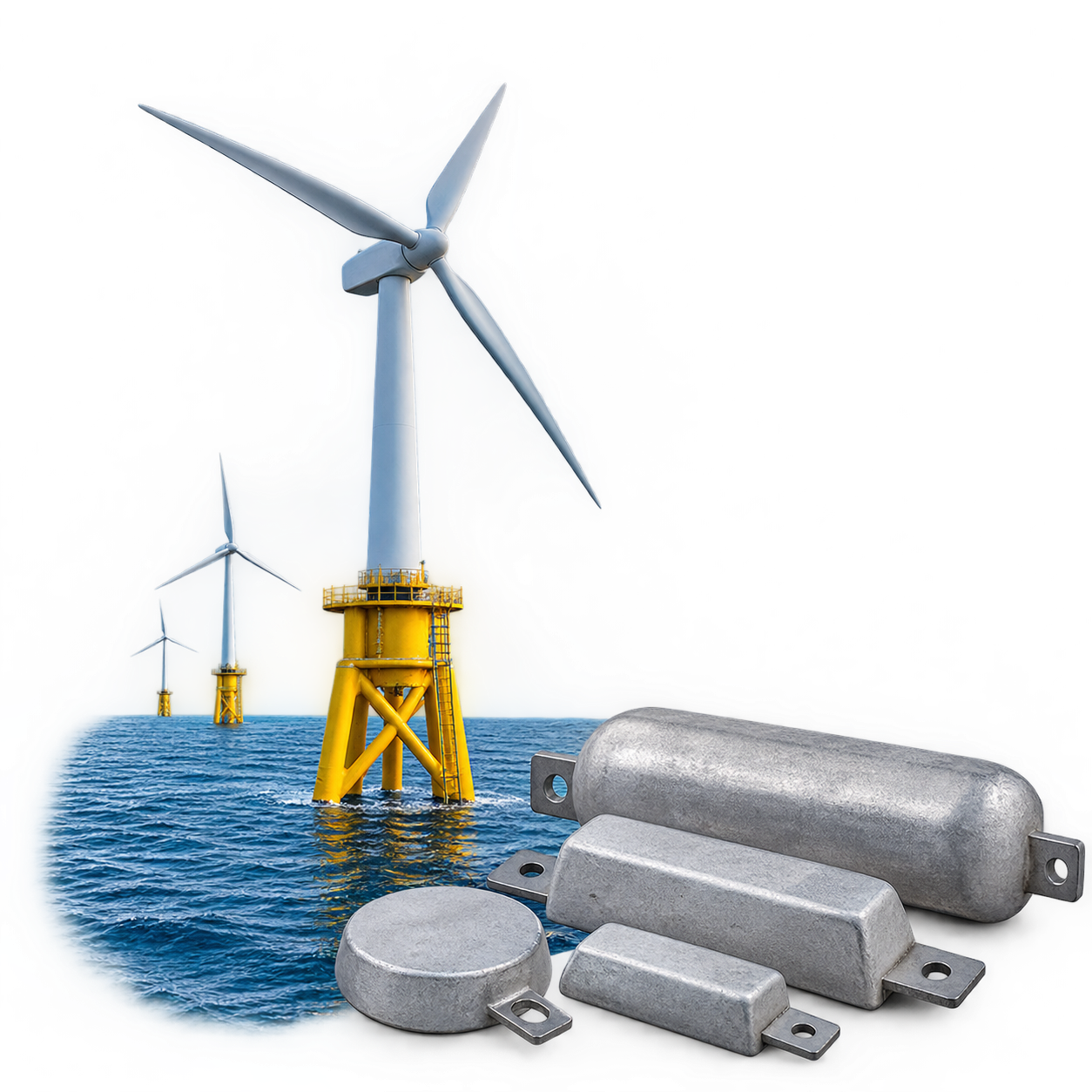 Offshore wind farm anodesFoundations and substations
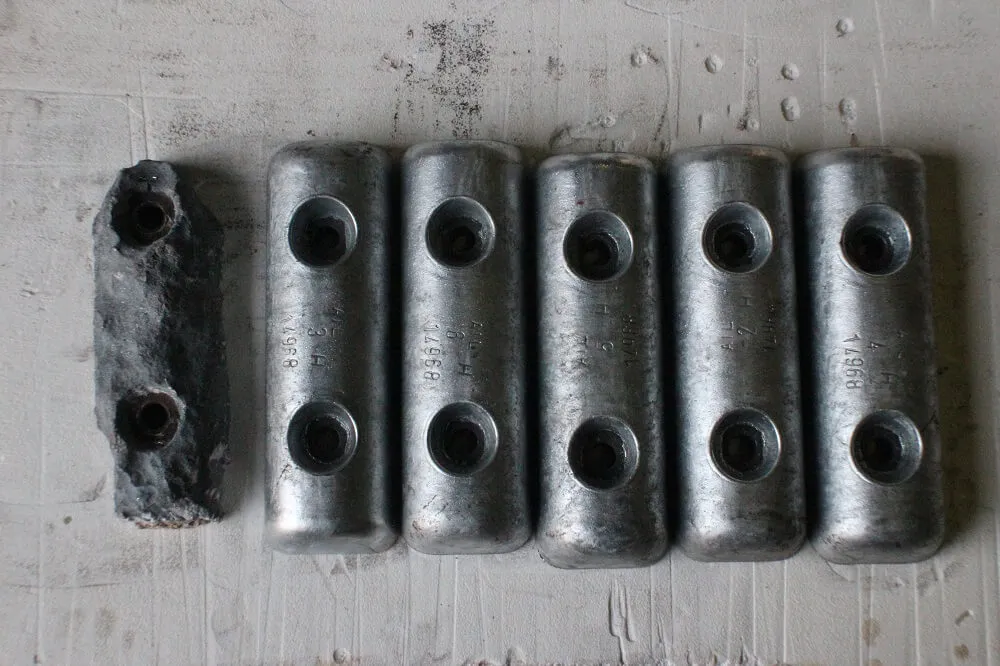 Miscellaneous application anodesCylindrical, spherical and retrofit
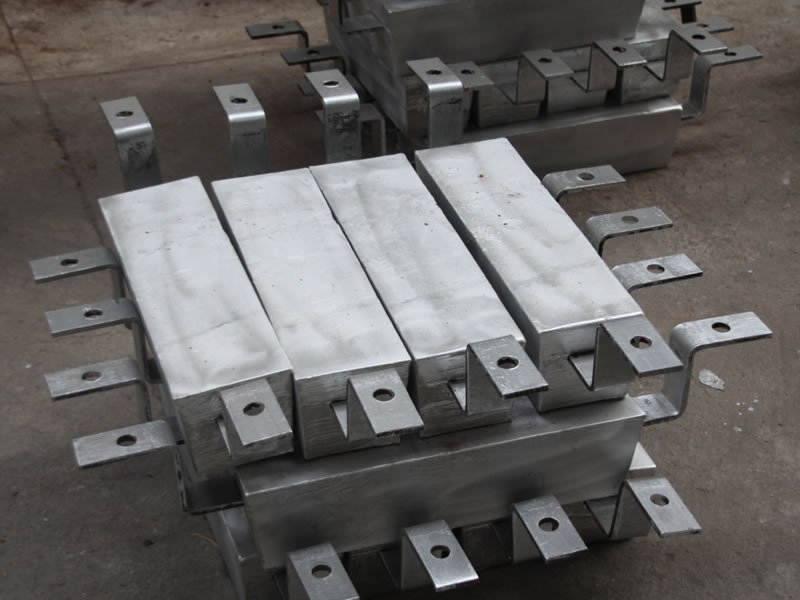 Custom application anodesEngineered to your drawing
Manufacturing and quality
A controlled route from your drawing to a documented, ready-to-install anode.
-
01
Engineering review
We review your drawings, CP design and specification, and confirm alloy, net weight, insert design and tolerances before production.
-
02
Insert preparation
Steel inserts are cut, formed and surface-prepared to the approved design for a secure bond with the anode.
-
03
Melting and chemistry control
Each melt is prepared to the specified alloy, and its chemistry is checked against the required limits before casting.
-
04
Casting
Anodes are cast to the required shape and net weight, with the insert soundly embedded.
-
05
Inspection and testing
Visual, dimensional and weight checks, plus chemical analysis and electrochemical testing where the specification requires them.
-
06
Documentation and dispatch
Anodes are identified, packed for safe transport and supplied with the agreed test records.
Inspection and documentation follow the project's inspection and test plan (ITP). Read about our approach to quality.
Frequently asked questions
What is an aluminium anode?
A sacrificial anode cast from an activated aluminium alloy — typically aluminium-zinc-indium. In seawater it corrodes in place of the connected steel and supplies the protective current.
What capacity do your aluminium anodes deliver?
Our reference data gives an electrochemical capacity of 2,550–2,750 Ah/kg, with a closed-circuit potential more negative than −1.05 V vs Ag/AgCl, in seawater at 23 °C.
Which specifications are available?
Galvalum III equivalent, DNV / ISO (Al-Zn-In limits per DNV-RP-B401 and ISO 15589-2), Alanode, or your own client specification.
Why add zinc and indium to aluminium?
Pure aluminium forms a protective oxide film that stops it working as an anode. Indium breaks down that film to keep the anode active, and zinc helps it dissolve evenly at a stable potential.
Can aluminium anodes be used in soil or fresh water?
Generally not. Aluminium alloys are designed for seawater. For buried or fresh-water steel, magnesium anodes are usually specified.
Can you produce anodes to our drawings?
Yes. Dimensions, net weight, inserts and fixing details are produced to your approved drawings and CP design.
Need aluminium anodes for your project?
Share your drawing, alloy specification and quantities. We'll review the requirement and respond with a technical and commercial proposal.
Helpful to include
- Drawing or anode dimensions
- Alloy and specification
- Net weight per anode
- Insert and mounting details
- Quantity
- Required delivery date