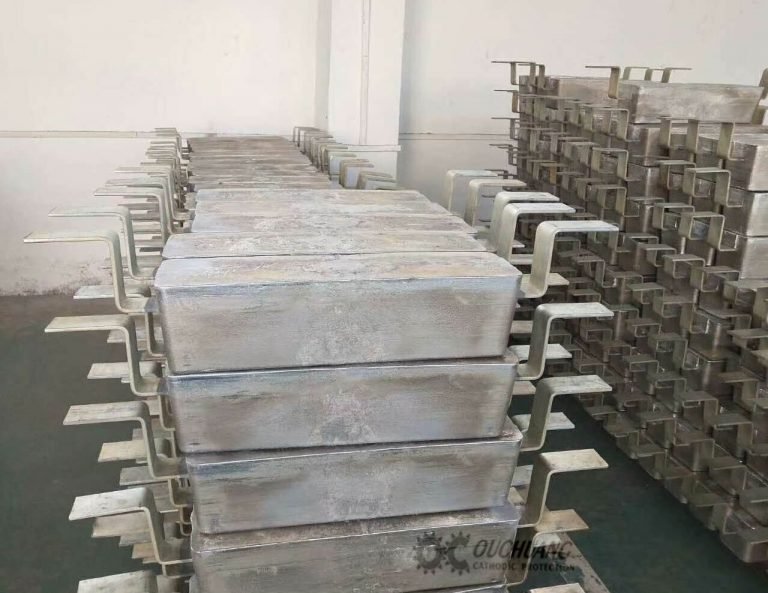
Why the alloy matters
On its own, aluminium quickly forms a thin oxide film that stops it working as an anode. Small, carefully controlled additions of zinc and indium keep the surface active, turning aluminium into the highest-capacity sacrificial anode material available for seawater.
Because the active elements are present in such small amounts — indium is measured in hundredths of a percent — performance depends on precise chemistry control. Getting the alloy right is what separates a reliable anode from one that passivates in service.
We cast Al-Zn-In anodes to Galvalum III-equivalent, DNV / ISO and Alanode chemistries, or to your own specification, with dimensions and inserts produced to your approved drawings.
How each element contributes
Each element in an Al-Zn-In anode has a specific job. The ranges below cover the chemistries we supply.
Aluminium
RemainderThe base metal. Provides the high electrochemical capacity and low density that make these anodes efficient and light.
Zinc
0.50 – 6.5%Lowers the operating potential and promotes even, uniform dissolution of the anode surface.
Indium
0.005 – 0.05%The activator. Breaks down the passive oxide film so the anode keeps delivering current throughout its life.
Controlled impurities
Held to tight maximumsIron and copper are kept to very low limits because even small amounts reduce efficiency and can cause passivation.
Key properties of Al-Zn-In anodes
High capacity
2,550–2,750 Ah/kg — more protection from every kilogram.
Stays active
Indium activation keeps the anode working at a stable potential.
Lightweight
Aluminium base reduces anode weight and structural load.
Tightly controlled chemistry
Active elements and impurities held within specified limits.
Recognised alloys
Galvalum III equivalent, DNV / ISO and Alanode chemistries.
Any configuration
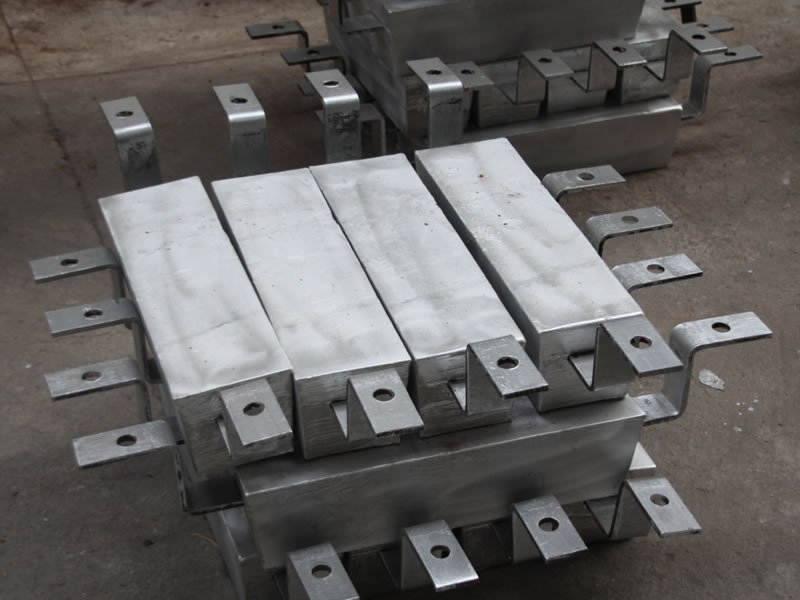
Stand-off, flush, bracelet, hull and custom shapes made to drawing.
Technical data
Typical supply parameters. Final values are confirmed against your approved drawing and CP design.
- Product
- Aluminium-zinc-indium sacrificial anode
- Alloy system
- Aluminium – zinc – indium
- Protection method
- Galvanic (sacrificial) cathodic protection
- Material
- Aluminium alloy with zinc and indium additions
- Typical applications
- Marine, offshore and submerged steel structures
- Service environment
- Seawater and marine, as defined by the CP design
- Configuration
- Application-specific
- Dimensions
- To approved drawing and CP design
- Mounting
- To the approved installation design
- Electrical continuity
- As required by the CP design
- Design life
- As defined by the approved CP design
- Specification
- Applicable alloy standard, client specification and approved drawing
Grades and standards
Galvalum III equivalent
A well-established Al-Zn-In chemistry for seawater service, cast to equivalent composition limits.
DNV / ISO
Al-Zn-In composition in line with the limits given in DNV-RP-B401 and ISO 15589-2.
Alanode
Aluminium alloy chemistry supplied to the applicable Alanode composition limits.
Client specification
Your own chemistry, testing and documentation requirements, reviewed and confirmed with you before production starts.
Grade selection
Final alloy grade, chemical composition, dimensions, net weight and configuration should be confirmed against the approved CP design and project specification.
Chemical composition
Composition limits in % by weight for the chemistries we supply.
| Element | Galvalum III (equiv.) | DNV / ISO | Alanode |
|---|---|---|---|
| Zn | 2.0 – 6.5 | 2.5 – 5.75 | 0.50 – 5.00 |
| In | 0.01 – 0.02 | 0.016 – 0.04 | 0.005 – 0.05 |
| Si | 0.08 – 0.20 | 0.12 max. | 0.10 max. |
| Fe | 0.12 max. | 0.09 max. | 0.13 max. |
| Cu | 0.006 max. | 0.003 max. | 0.01 max. |
| Cd | 0.002 max. | — | — |
| Others (each) | 0.02 max. | 0.02 max. | 0.02 max. |
| Others (total) | 0.06 max. | — | — |
| Al | Remainder | Remainder | Remainder |
Specification note
Final chemistry should always be confirmed against the applicable material specification and approved project documents before production.
Electrochemical performance
Reference characteristics for our aluminium alloy anodes.
- Test environment
- Seawater at 23 °C
- Reference electrode
- Silver / silver chloride (Ag/AgCl)
- Open-circuit potential
- More negative than −1.10 V vs Ag/AgCl
- Closed-circuit potential
- More negative than −1.05 V vs Ag/AgCl
- Electrochemical capacity
- 2,550 – 2,750 Ah/kg
Performance note
Values apply to aluminium alloy anodes in seawater at 23 °C. In-service performance also depends on alloy chemistry, temperature, current demand and anode geometry, so final design values should always come from the approved cathodic protection (CP) design.
How the anode materials compare
A quick reference to help you see where this material fits.
| Property | Aluminium (Al-Zn-In)This page | Zinc | Magnesium |
|---|---|---|---|
| Main service environment | Seawater and marine | Seawater, marine and saline mud | Soil and fresh water |
| Closed-circuit potential | More negative than −1.05 V (Ag/AgCl) | Approx. −1.03 V (Ag/AgCl) | Approx. −1.5 to −1.7 V (Cu/CuSO₄) |
| Electrochemical capacity | 2,550 – 2,750 Ah/kg | Approx. 780 Ah/kg | Approx. 1,100 – 1,230 Ah/kg |
| Density | Approx. 2.7 g/cm³ | Approx. 7.1 g/cm³ | Approx. 1.8 g/cm³ |
| Key strength | Highest capacity per kilogram — fewer, lighter anodes | Proven, self-regulating and compact | Highest driving voltage for high-resistivity electrolytes |
| Points to check | Chemistry must be tightly controlled to stay active | Heavier; not recommended above approx. 50 °C | Consumed quickly; generally not used in seawater |
Typical reference values for comparison only. The correct material is always confirmed by the approved CP design for the structure and its environment.
Applications
Offshore oil and gas
Jackets, platforms and subsea structures.
Subsea pipelines
Bracelet anodes for pipeline CP systems.
Ship hulls
Hull anodes for vessels in seawater service.
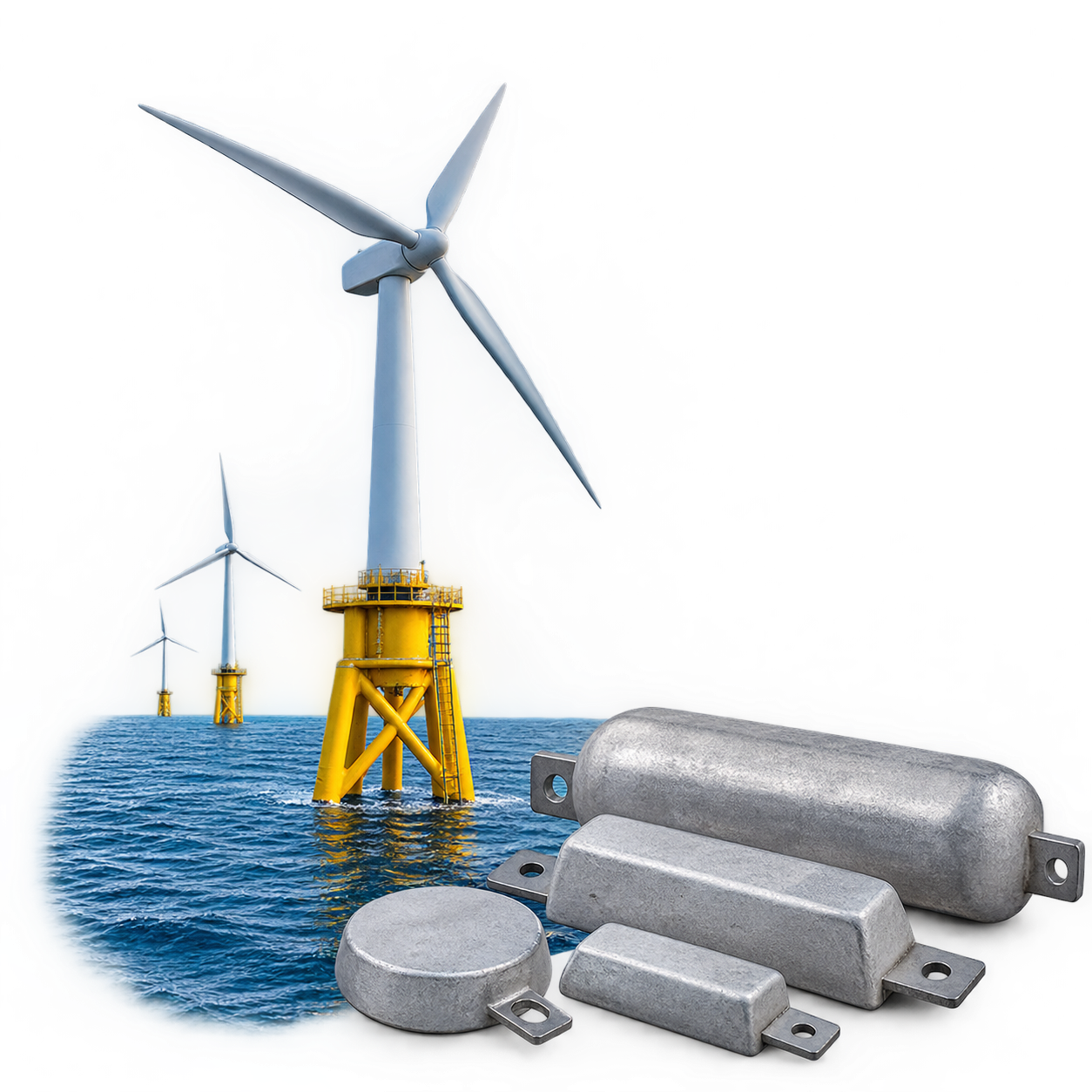
Offshore wind
Foundation and substation protection.
Ports and harbours
Piles, quays and seawater-exposed steel.
Retrofit
Life extension of existing structures.
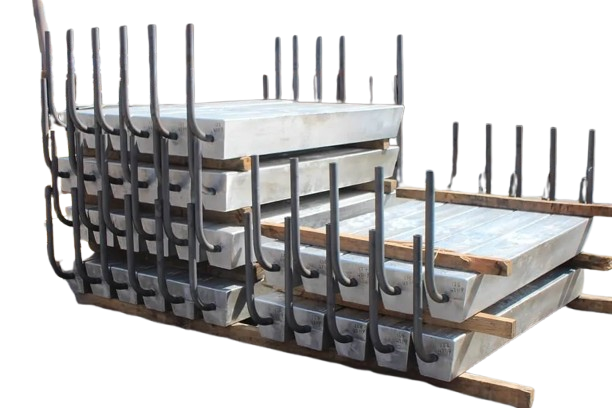
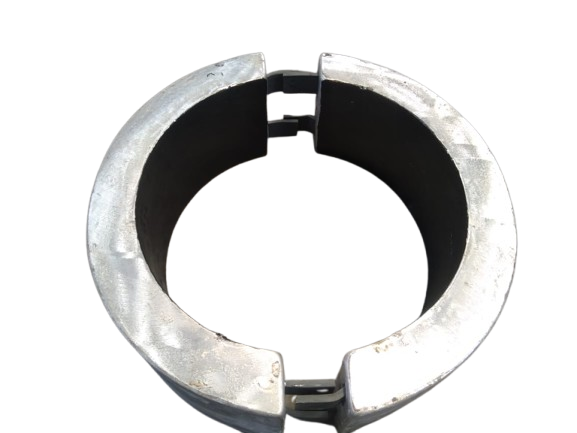
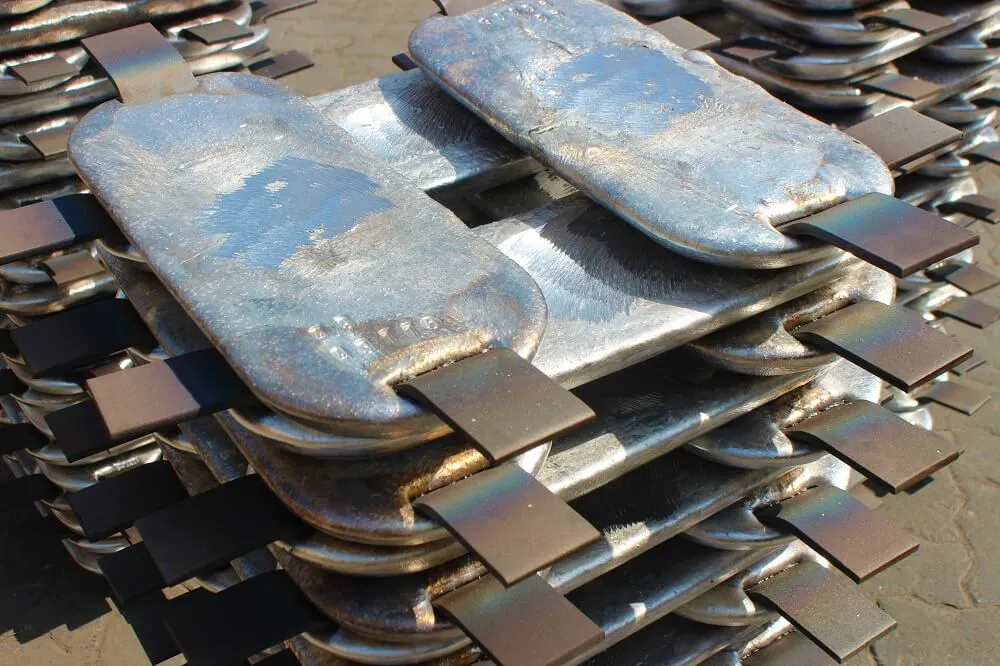
Where Al-Zn-In anodes are used
Explore the product configurations available in this material.
Manufacturing and quality
A controlled route from your drawing to a documented, ready-to-install anode.
-
01
Engineering review
We review your drawings, CP design and specification, and confirm alloy, net weight, insert design and tolerances before production.
-
02
Insert preparation
Steel inserts are cut, formed and surface-prepared to the approved design for a secure bond with the anode.
-
03
Melting and chemistry control
Each melt is prepared to the specified alloy, and its chemistry is checked against the required limits before casting.
-
04
Casting
Anodes are cast to the required shape and net weight, with the insert soundly embedded.
-
05
Inspection and testing
Visual, dimensional and weight checks, plus chemical analysis and electrochemical testing where the specification requires them.
-
06
Documentation and dispatch
Anodes are identified, packed for safe transport and supplied with the agreed test records.
Inspection and documentation follow the project's inspection and test plan (ITP). Read about our approach to quality.
Frequently asked questions
What is an Al-Zn-In anode?
An aluminium alloy sacrificial anode activated with small additions of zinc and indium. It is the most common anode alloy for seawater cathodic protection.
Why is indium added?
Indium breaks down the passive oxide film that naturally forms on aluminium, keeping the anode active and delivering current throughout its life.
What performance can I expect?
Our reference data gives 2,550–2,750 Ah/kg capacity, with a closed-circuit potential more negative than −1.05 V vs Ag/AgCl, in seawater at 23 °C.
Which chemistries do you supply?
Galvalum III equivalent, DNV / ISO, Alanode and client-specific chemistries. The composition table on this page shows the limits for each.
Is Al-Zn-In the same as 'aluminium anode'?
In seawater CP, usually yes — most aluminium anodes are Al-Zn-In alloys. This page focuses on the alloy chemistry; our aluminium anodes page covers the product family.
Can you cast to our specification?
Yes. We can work to your chemistry, test and documentation requirements, confirmed with you before production.
Need Al-Zn-In anodes for your project?
Tell us the chemistry, configuration and quantities you need. We'll confirm the specification and send you a proposal.
Helpful to include
- Drawing or anode dimensions
- Alloy and specification
- Net weight per anode
- Insert and mounting details
- Quantity
- Required delivery date