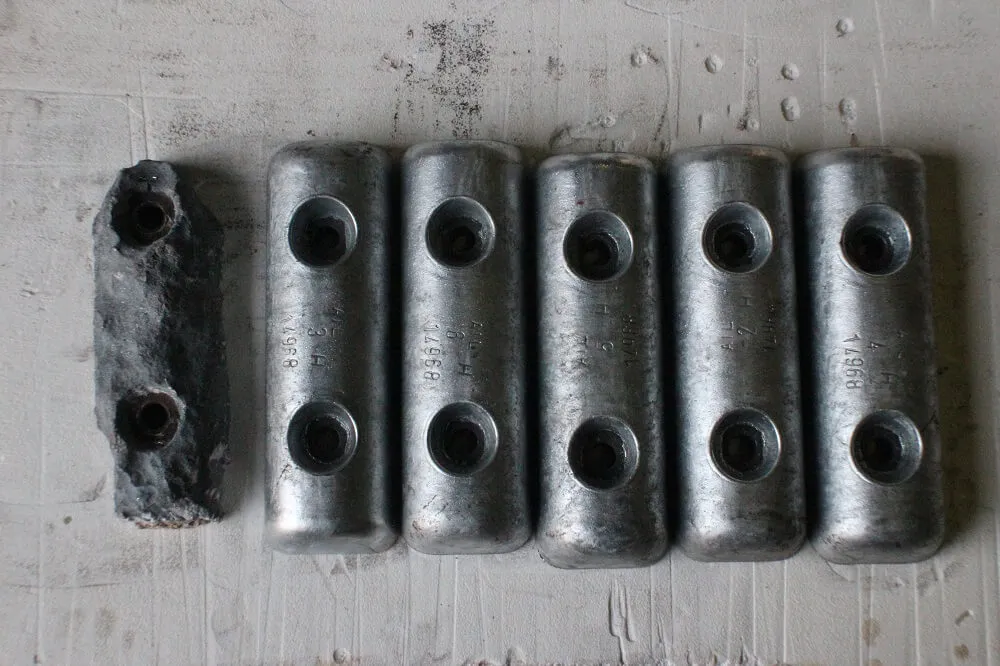
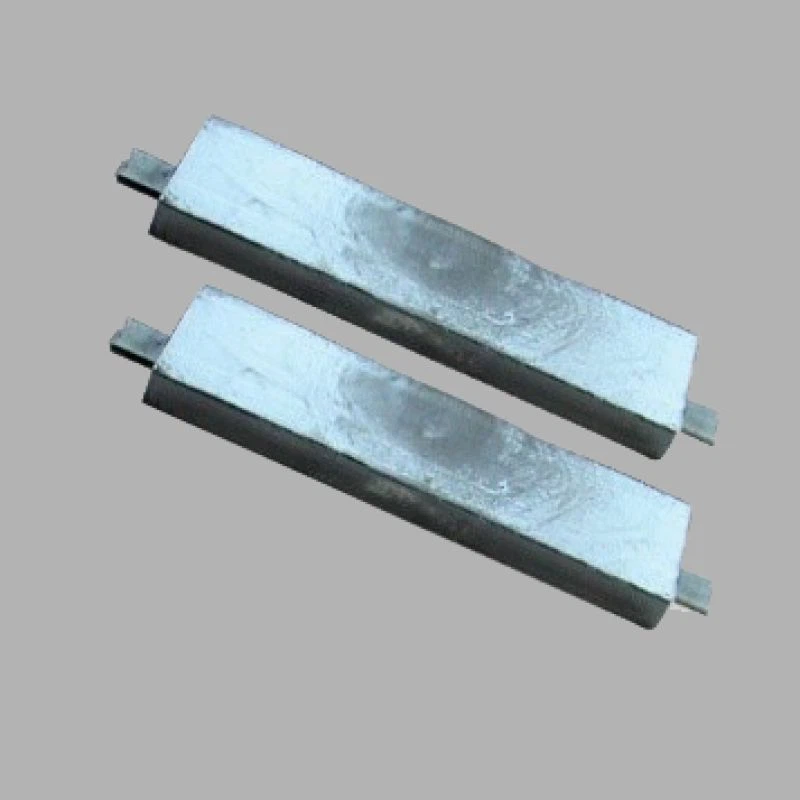
A proven choice for marine cathodic protection
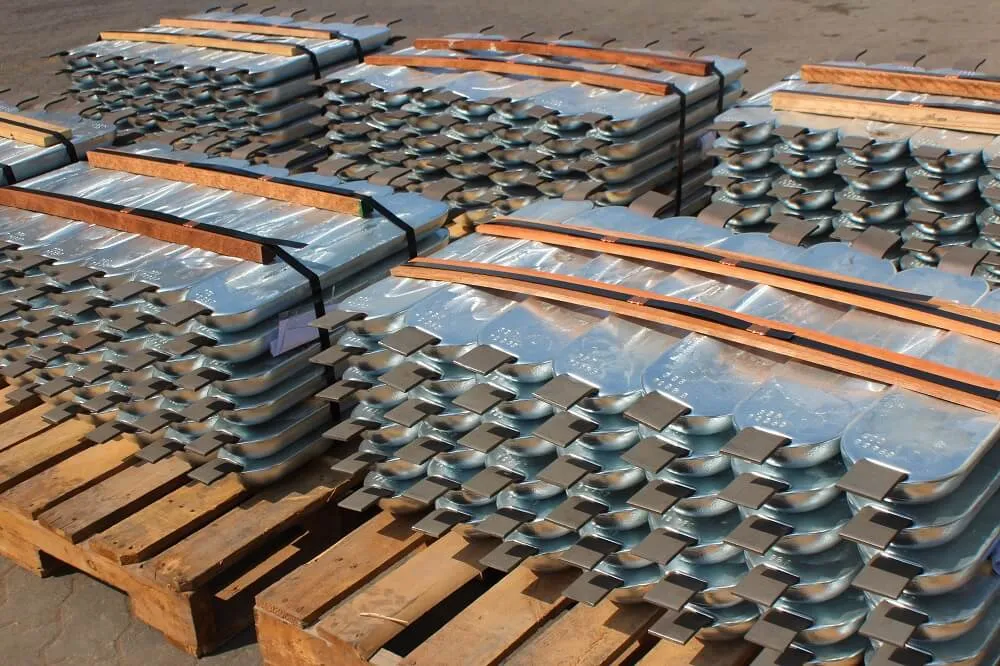
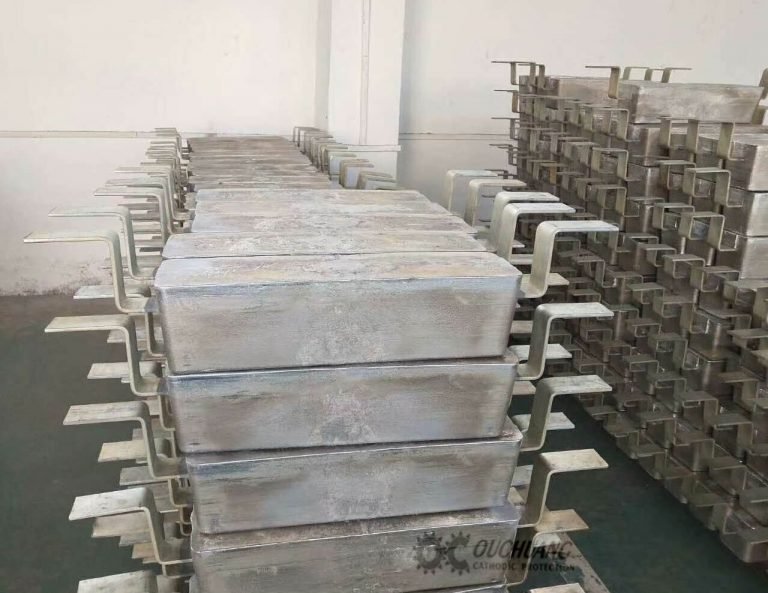
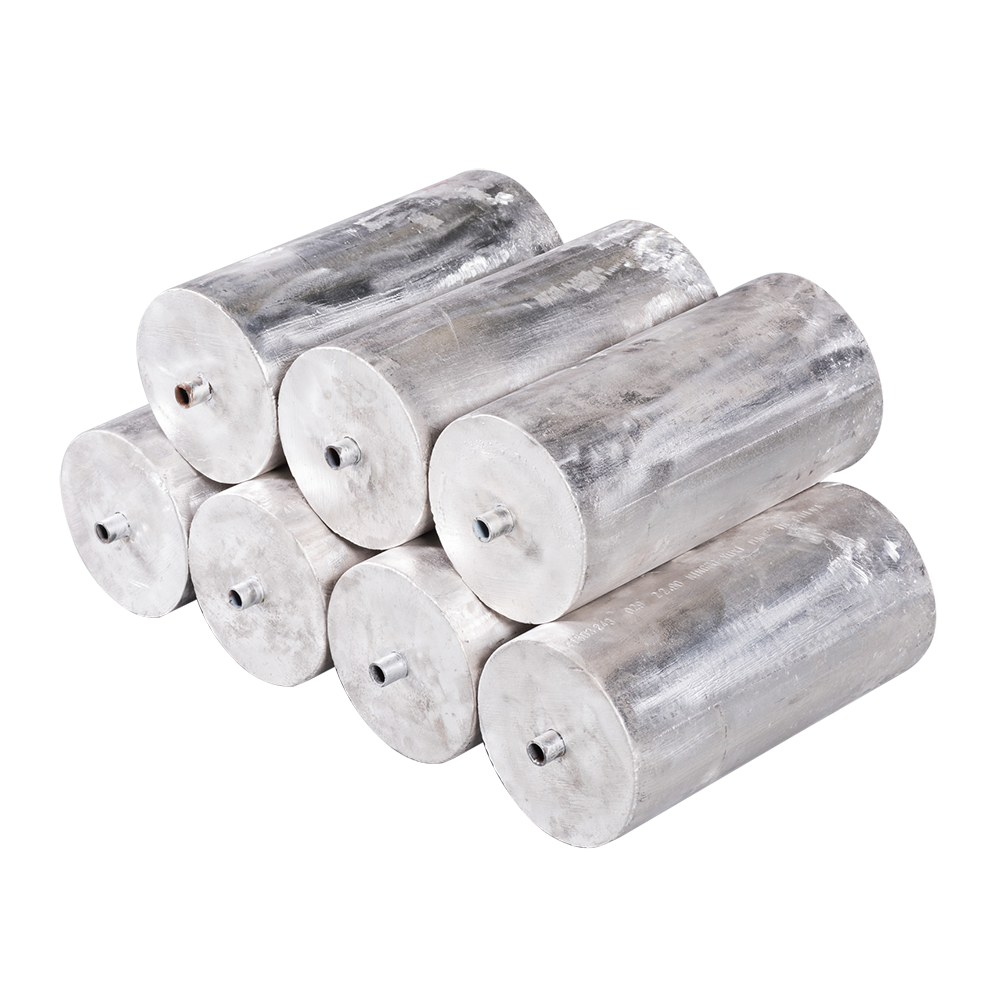
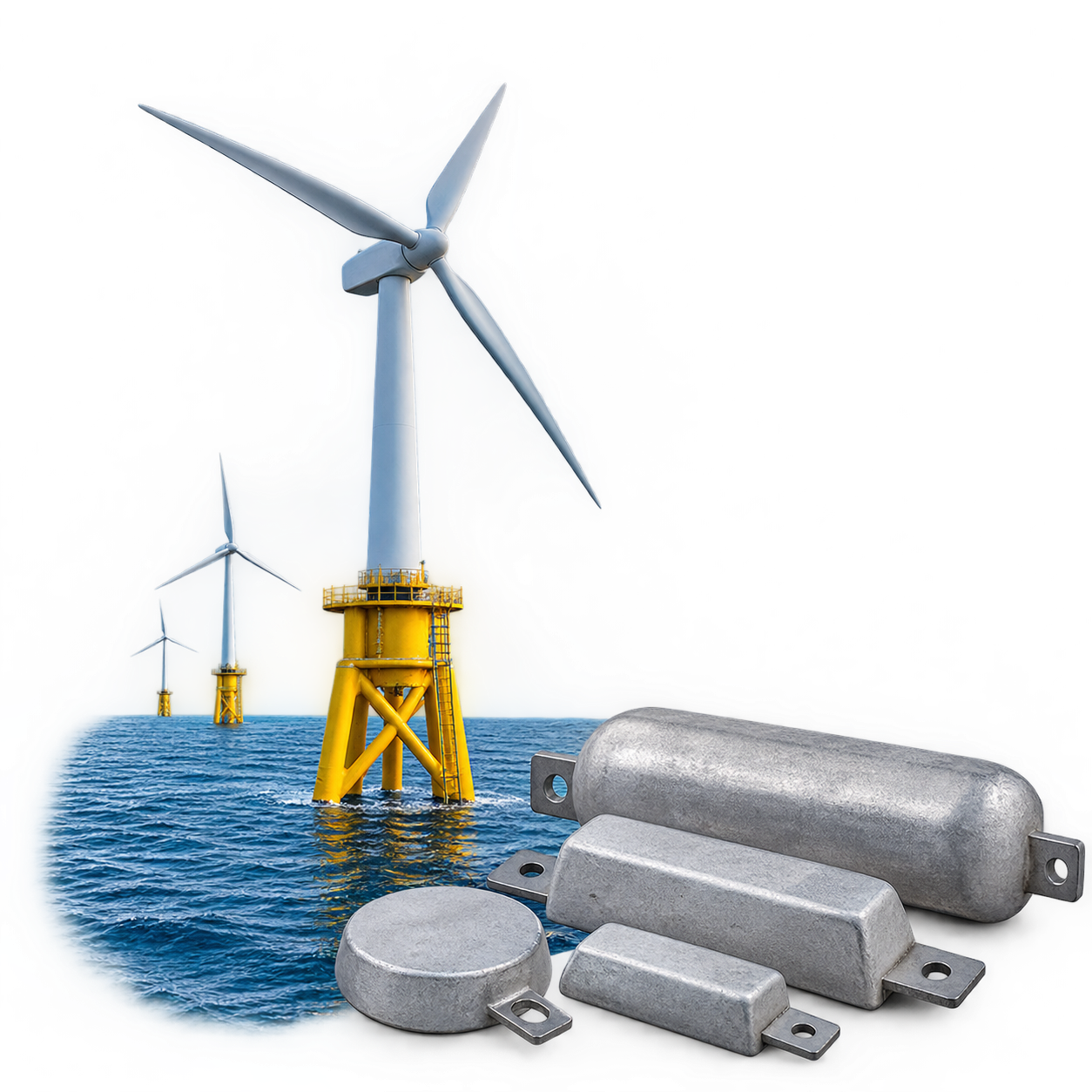
Zinc is one of the longest-established materials for sacrificial cathodic protection. When a zinc anode is electrically connected to steel in seawater, the zinc corrodes in preference to the steel and supplies the current that keeps the structure protected.
Zinc works at a moderate driving voltage and largely regulates its own output, which makes it forgiving in service. It is a natural fit for vessels, harbour structures and other marine assets — particularly where space is tight and a dense, compact anode is an advantage.
We cast zinc anodes to MIL-DTL-18001, ASTM B418 Type II or your own specification. Dimensions, inserts and fixing details are produced to your approved drawings and CP design.
Key properties of zinc anodes
Self-regulating output
Current output follows the structure's demand, reducing the risk of over-protection and coating damage.
Compact and dense
At around 7.1 g/cm³, zinc fits more anode mass into a small space — ideal for hulls, sea chests and confined areas.
Marine service record
Decades of use on ships, harbours and offshore structures in seawater and saline mud.
Specification-driven chemistry
Cast to US military, ASTM or client chemistry, with composition checked against the specified limits.
Made to drawing
Shape, net weight, insert and fixing arrangement are produced to your approved design.
Dependable protection
A stable, well-understood anode material that CP engineers specify with confidence.
Technical data
Typical supply parameters. Final values are confirmed against your approved drawing and CP design.
- Product
- Zinc sacrificial anode
- Protection method
- Galvanic (sacrificial) cathodic protection
- Material
- Zinc alloy
- Typical applications
- Marine and submerged steel structures
- Service environment
- Seawater and marine
- Configuration
- Application-specific
- Dimensions
- To approved drawing and CP design
- Mounting
- To the approved installation design
- Electrical continuity
- As required by the CP design
- Design life
- As defined by the CP design
- Specification
- MIL-DTL-18001, ASTM B418 Type II or client specification
Grades and standards
US Military spec. (MIL-DTL-18001)
Zinc alloy with controlled aluminium and cadmium additions, widely specified for seawater service.
ASTM B418 Type II
High-purity zinc with very tight iron limits, typically specified for soil and fresh-water service.
Client specification
Your own chemistry, testing and documentation requirements, reviewed and confirmed with you before production starts.
Chemical composition
Composition limits in % by weight for the chemistries we supply.
| Element | US Military spec. (MIL-DTL-18001) | ASTM B418 Type II |
|---|---|---|
| Al | 0.10 – 0.50 | 0.005 max. |
| Si | 0.125 max. | — |
| Cd | 0.025 – 0.15 | 0.03 max. |
| Fe | 0.005 max. | 0.0014 max. |
| Pb | 0.006 max. | 0.003 max. |
| Cu | 0.005 max. | 0.002 max. |
| Zn | Remainder | Remainder |
Specification note
Final chemistry should always be confirmed against the applicable material specification and approved project documents before production.
How the anode materials compare
A quick reference to help you see where this material fits.
| Property | Aluminium (Al-Zn-In) | ZincThis page | Magnesium |
|---|---|---|---|
| Main service environment | Seawater and marine | Seawater, marine and saline mud | Soil and fresh water |
| Closed-circuit potential | More negative than −1.05 V (Ag/AgCl) | Approx. −1.03 V (Ag/AgCl) | Approx. −1.5 to −1.7 V (Cu/CuSO₄) |
| Electrochemical capacity | 2,550 – 2,750 Ah/kg | Approx. 780 Ah/kg | Approx. 1,100 – 1,230 Ah/kg |
| Density | Approx. 2.7 g/cm³ | Approx. 7.1 g/cm³ | Approx. 1.8 g/cm³ |
| Key strength | Highest capacity per kilogram — fewer, lighter anodes | Proven, self-regulating and compact | Highest driving voltage for high-resistivity electrolytes |
| Points to check | Chemistry must be tightly controlled to stay active | Heavier; not recommended above approx. 50 °C | Consumed quickly; generally not used in seawater |
Typical reference values for comparison only. The correct material is always confirmed by the approved CP design for the structure and its environment.
Points to consider when specifying zinc
- Zinc is not recommended where the anode will operate above approximately 50 °C.
- For the same design life, zinc anodes are heavier than aluminium — confirm weight limits on the structure.
- Iron content must be kept very low; it is one of the main causes of reduced zinc performance.
- Anode size and quantity should come from a CP calculation, not from like-for-like replacement alone.
Applications
Ship hulls and vessels
Hull, rudder and stern-area protection on commercial and workboat fleets.
Harbour and marine structures
Jetties, piles, sheet piling and other seawater-exposed steel.
Offshore structures
Submerged members of platforms and offshore installations.
Subsea pipelines
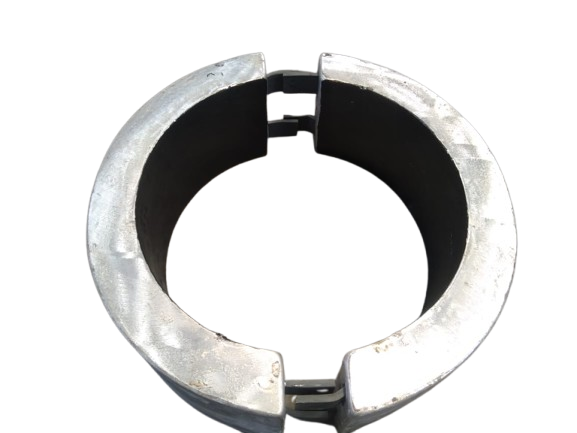
Bracelet anodes for selected pipeline CP systems.
Retrofit and replacement
Anodes matched to existing mounting arrangements.
Ballast tanks and sea chests
Compact anodes for confined, intermittently wetted spaces.
Where zinc anodes are used
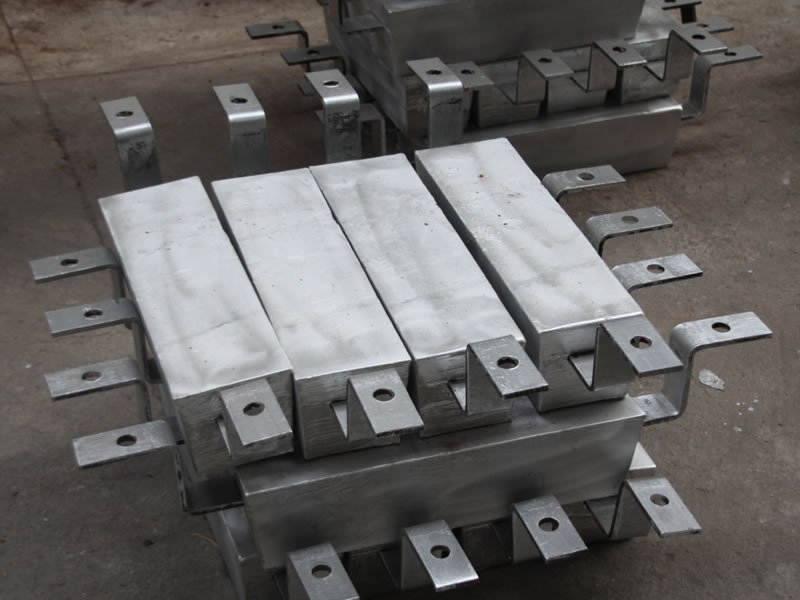
Explore the product configurations available in this material.
Manufacturing and quality
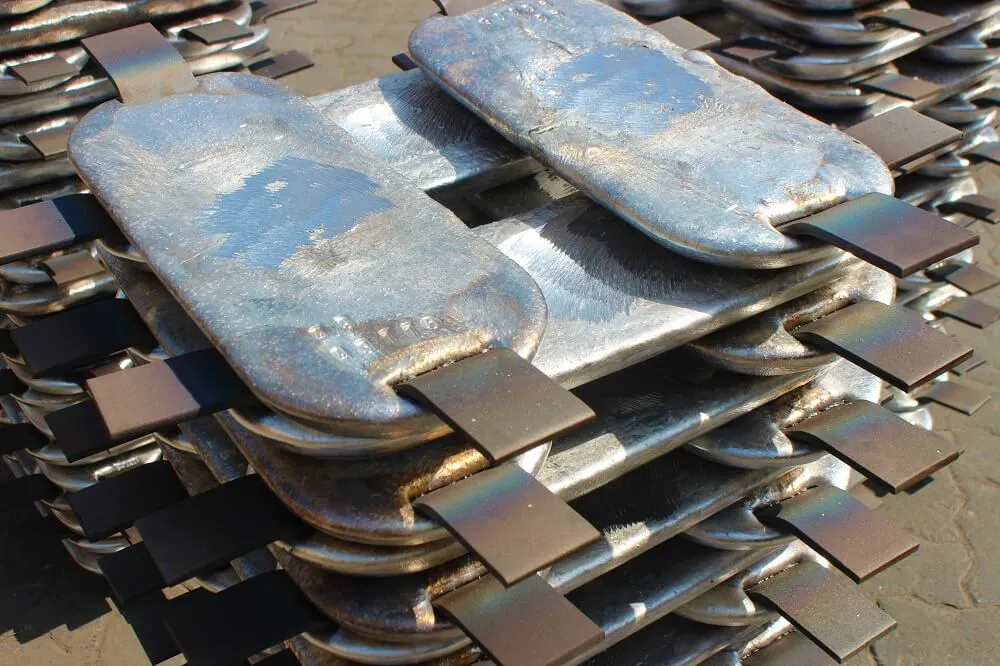
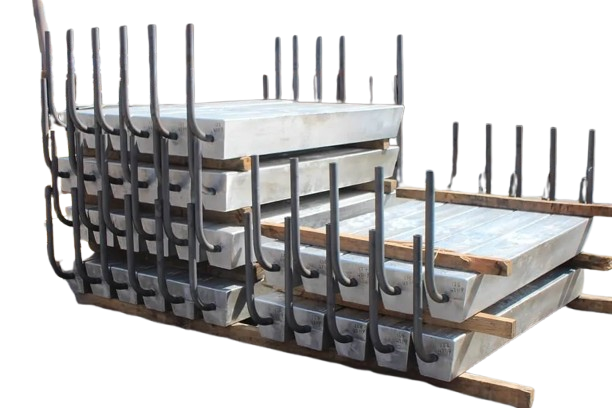
A controlled route from your drawing to a documented, ready-to-install anode.
-
01
Engineering review
We review your drawings, CP design and specification, and confirm alloy, net weight, insert design and tolerances before production.
-
02
Insert preparation
Steel inserts are cut, formed and surface-prepared to the approved design for a secure bond with the anode.
-
03
Melting and chemistry control
Each melt is prepared to the specified alloy, and its chemistry is checked against the required limits before casting.
-
04
Casting
Anodes are cast to the required shape and net weight, with the insert soundly embedded.
-
05
Inspection and testing
Visual, dimensional and weight checks, plus chemical analysis and electrochemical testing where the specification requires them.
-
06
Documentation and dispatch
Anodes are identified, packed for safe transport and supplied with the agreed test records.
Inspection and documentation follow the project's inspection and test plan (ITP). Read about our approach to quality.
Frequently asked questions
What is a zinc anode?
A zinc anode is a sacrificial anode used in galvanic cathodic protection. Connected to steel in an electrolyte such as seawater, the zinc corrodes in place of the steel and keeps the structure protected.
Where are zinc anodes typically used?
Mainly in seawater and marine service — ship hulls, harbour structures, offshore members, ballast tanks and selected subsea pipelines.
Which specifications do you supply?
We cast zinc anodes to US Military specification MIL-DTL-18001, ASTM B418 Type II, or your own client specification.
Zinc or aluminium — which should I choose?
Aluminium offers more than three times the capacity per kilogram, so it is usually lighter for the same design life. Zinc is compact, self-regulating and well proven. The CP design for your structure should make the final call; we're happy to discuss the options.
Can you manufacture to our drawings?
Yes. Dimensions, net weight, inserts and fixing details are produced to your approved drawings and CP design.
What determines the size of a zinc anode?
The CP design — based on the protected surface area, coating condition, current density, required design life and installation constraints.
Are there temperature limits for zinc?
Yes. Zinc is generally not recommended where the anode surface will operate above approximately 50 °C. Aluminium alloys are usually preferred for warmer service.
Planning a zinc anode requirement?
Send us your drawing, quantities and specification. Our team will review them and come back with a technical and commercial proposal.
Helpful to include
- Drawing or anode dimensions
- Alloy and specification
- Net weight per anode
- Insert and mounting details
- Quantity
- Required delivery date